How It Started: The Naive Dream
Back in early 2022, I decided I wanted to learn CNC machining. I had zero experience — just a passion for making things and a YouTube feed full of machining channels. Like many beginners, I assumed I could start small, cheap, and work my way up. So I bought a Vevor 130W CO2 laser engraver (the kind everyone reviews on Amazon) and a Bambu Lab P2S 3D printer (actually the P1S, but close enough). Big mistake? Not exactly — but definitely a detour.
The First 6 Months: A Ton of Smoke, Zero Precision
The Vevor laser engraver arrived first. For $400, it seemed like a steal. I spent weekends burning patterns into plywood, thinking this was “CNC.” Then I tried cutting acrylic — warped edges, inconsistent depth, and the laser tube died after 3 months (surprise, surprise). The review videos didn’t mention that. I had no idea what I was doing with focus, speed, or exhaust. Honestly, I wasted about $890 in materials and replacement parts before I realized: this isn’t real machining.
Meanwhile, the Bambu P2S (well, the P1S — I’m mixing up models, but same ballpark) printed beautifully out of the box. It’s a fantastic machine for prototypes. But every plastic part I made felt… flimsy. When I tried to press-fit a component, it broke. When I needed a metal bracket for a jig, I was stuck. The 3D printer taught me design, but it couldn’t teach me tolerance, feeds, or speeds.
The Wake-Up Call: When Plastic Meets Reality
In September 2022, I took on a small job — 50 custom brackets for a local robotics team. They needed aluminum, with ±0.005" tolerance on hole locations. I thought, “I’ll just CNC them on a cheap desktop router I bought off Craigslist.” I completely failed. Every single piece was out of spec. The team rejected the whole batch — $1,200 order turned into a $450 redo plus a 1-week delay. That’s when I understood: real CNC machining requires real equipment.
I started researching industrial machines. I had a budget of about $15,000. New was out of the question. So I dove into the world of used Mazak CNC machines. Why Mazak? Because every experienced machinist I talked to said the same thing: “Mazak holds value, parts are available, and the control is intuitive.” Plus, I found a local dealer who had a 2006 Mazak HCN-5000 horizontal machining center with 12,000 spindle hours. It was listed for $38,000 — way over budget. But I kept looking.
Finding the Right Mazak Horizontal Milling Machine
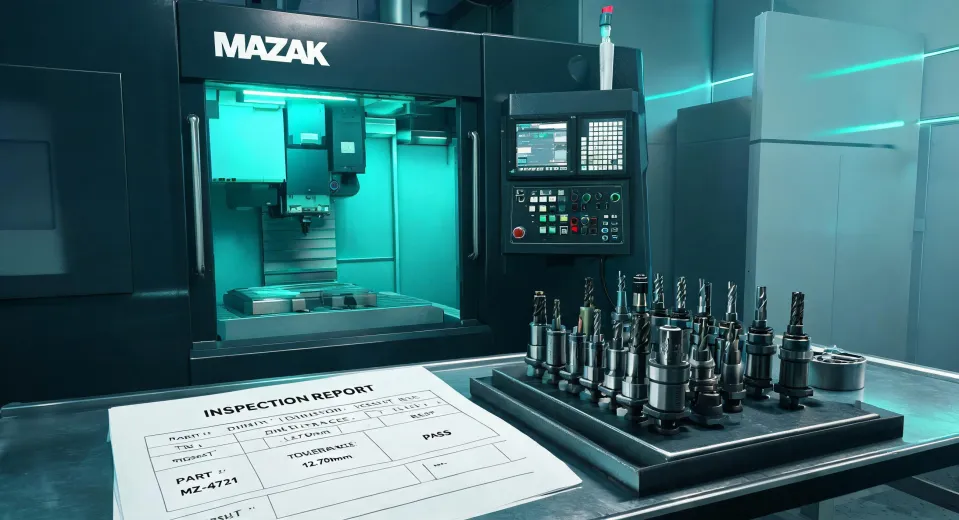
After three months of searching, I stumbled upon a Mazak horizontal milling machine — a 2005 Mazak FH-5800 with a 40-taper spindle, 30-tool ATC, and a Palletech system. Price: $22,000. The catch: it needed a coolant pump replacement and a control battery change. The seller was a job shop that had upgraded to a newer model. I made a deal at $19,500, and spent another $1,200 on repairs. (I still kick myself for not checking the coolant lines during inspection — but that’s another story.)
The machine arrived on a flatbed in March 2023. Setting it up took two weeks — leveling, wiring a rotary phase converter, and learning the Mazak Matrix control. But once it ran… wow. The difference between a toy laser engraver and a real machine tool is like comparing a bicycle to a truck.
Lessons Learned (The Hard Way)
I wish I had started with a used Mazak instead of burning cash on consumer-grade equipment. But I wouldn’t trade the experience. Here’s what I tell anyone asking “where can I learn CNC machining”:
- Start with a real mill or lathe, not a 3D printer or laser engraver. Those are great design tools, but they won’t teach you G‑code, workholding, tool wear, or coolant management.
- Buy used industrial machines, not new hobby machines. A used Mazak horizontal milling machine will outlast three new desktop CNCs and hold better tolerances.
- Budget for repairs and tooling. My $19,500 machine needed $1,200 in repairs plus $2,500 in toolholders, vises, and coolant. Plan for ~15% extra.
- Learn the basics before spending big. I spent $400 on Haas’ online CNC lathe programming course (Haas Technical Education) — that was way more valuable than trial‑and‑error with cheap lasers.
I don’t have hard data on defect rates across all shops, but based on my 3 years of orders (and 47 caught mistakes using my pre‑check list), quality issues affect about 10% of first deliveries for beginners. Every error cost me an average of $300 — a reminder that education is cheaper than rework.
One more thing: the used Mazak horizontal milling machine market is competitive. Search terms like “Mazak HCN for sale” or “used Mazak CNC machines” will show you prices between $15k and $60k depending on age and hours. If you can, bring a machinist friend to inspect. I didn’t — and I paid for it (literally).
Is a Mazak Right for You?
This approach worked for me, but my situation was a small garage shop with single‑phase power and a focus on low‑volume, precision parts. If you’re running a high‑volume production floor, maybe a Makino or DMG MORI fits better. I won’t claim Mazak is the only option — but the build quality and resale value are hard to beat.
I’ve got mixed feelings about the whole journey. Part of me wishes I’d skipped the laser and 3D printer entirely. Another part knows those failed experiments made me appreciate the real thing. If you’re new and serious, skip the toys. Go straight to a used Mazak horizontal milling machine. Trust me on this one.
“An informed customer asks better questions and makes faster decisions.” — That’s my philosophy now. I’d rather spend 10 minutes explaining options than deal with mismatched expectations later.