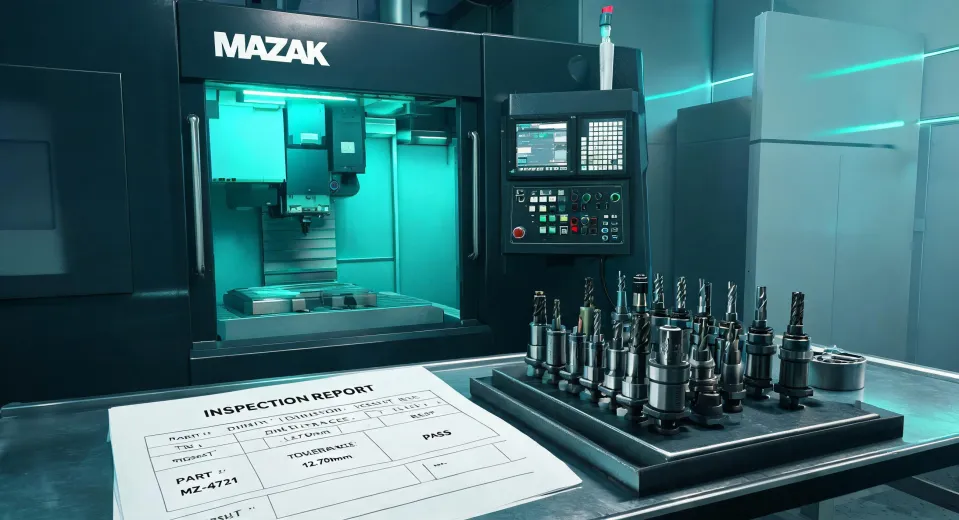
If you‘ve been looking at a Mazak HCN series or any of their horizontal machining centers, you know the price is… significant. I get it. As a procurement manager for a 40-person mold and die shop, I’ve gotten that initial quote and winced. You start thinking, “Can we get away with a used machine? Should I look at that budget brand instead?”
I've been there. In 2023, when we needed to replace our aging vertical mill with a new Mazak horizontal machining center, I almost made a 180k mistake. Not by buying a bad machine, but by only looking at the purchase order.
The Surface Problem: That Sticker Shock
The obvious problem everyone talks about is the upfront cost. A new Mazak HCN-5000 isn't cheap. You look at the base price, add the pallet system, the high-pressure coolant, and the tooling package, and you're looking at a figure that can make a small shop owner dizzy.
But honestly, that's not the real problem. The real problem isn‘t that Mazaks are expensive. It's that we shop for them wrong.
The Deep Reason: We’re Bad at Calculating Total Cost of Ownership (TCO)
What most people don't realize is that the price of the machine is just the entry fee. The real cost of a Mazak machining center — or any precision asset — is buried in three places:
- Installation and infrastructure: Concrete work, rigging, electrical (maybe a rotary phase converter if your shop is older), and coolant systems.
- Tooling and workholding: Mazaks are rigid. To take advantage of that, you need quality holders, high-feed mills, and proper vises or fixtures. Cheap tooling on a Mazak is a waste.
- Programming and training: The Mazak Mazatrol control is amazing, but it‘s a different language if your programmers are used to G-code exclusively. Training time is a real cost.
I learned this the hard way. In mid-2024, we compared a high-spec Mazak to a “value” horizontal machining center from a less established brand. The value machine was $55k cheaper on paper. When I built my TCO spreadsheet, factoring in the cost of downtime for that brand's service reliability (which I found from talking to three of their users), the Mazak paid for itself in year two via uptime alone.
The Hidden Price of Cutting Corners
The real danger isn't paying for a Mazak. It's paying for something else and not getting the capability you need.
Here‘s something vendors won't tell you: That “cheap” machine often lacks the thermal compensation and spindle rigidity to hold tight tolerances on a second shift during summer. Your floor heats up, the machine drifts, and you scrap a part. One scrapped aerospace bracket — and I’ve seen this happen — can cost more than the difference between a value machine and a Mazak.
It's not just about paying less. It‘s about the risk of redoing work. When we audited our 2023 spending, we found that 12% of our “budget overruns” came from reworking parts that should have been right the first time. A better machine doesn't eliminate that entirely, but it drastically reduces variance.
Why Small Shops Shouldn't Be Scared of Mazak
I know what you're thinking: “That's great for a big shop, but we're just starting out.”
I disagree. When I was a buyer at a smaller job shop, we bought our first Mazak vertical machining center. It was a used one, a 2008 model. We were terrified of the cost, even used. But that machine ran parts for seven years with only routine maintenance. We couldn‘t have done that with a cheaper, lighter machine. It allowed us to quote work we couldn't touch before.
Don't let anyone tell you that a Mazak is “too much machine” for a small shop. If you have the work, it's an asset, not a liability. The vendors I respect don't judge based on order size. I’ve placed $2,000 tooling orders that got faster service than $100k machine orders from other brands, just because we demonstrated we knew what we were doing.
Practical Advice: How to Buy Smarter
If you‘re serious about a Mazak horizontal machining center or even a standard HCN series machine, here's what I’ve learned after tracking orders for six years:
- Get the Mazatrol training upfront. Budget for it. It's an investment, not an expense.
- Buy the high-pressure spindle option. It unlocks chip breaking and longer tool life. Skip it, and you'll regret it.
- Price out tooling with the machine. Don't just buy the iron. A mapal face mill or a seca reamer doesn't work well with a cheap collet holder.
- Talk to your Mazak integrator about your part family. They can suggest the right pallet count and automation level. You might not need the top-tier robot loader from day one.
I went back and forth between a new Mazak and a used German machine for weeks. The used one offered more iron for the dollar. The Mazak offered better control support and local service. I chose Mazak, and honestly, I‘m not sure it was the perfect decision. But the service we’ve gotten from the local distributor—they treat us like we're a Fortune 500 account—makes it the right one for now.
This was based on pricing and data as of March 2025. Verify current rates and availability with your local Mazak distributor. The market changes fast, especially with import tariffs and lead times.