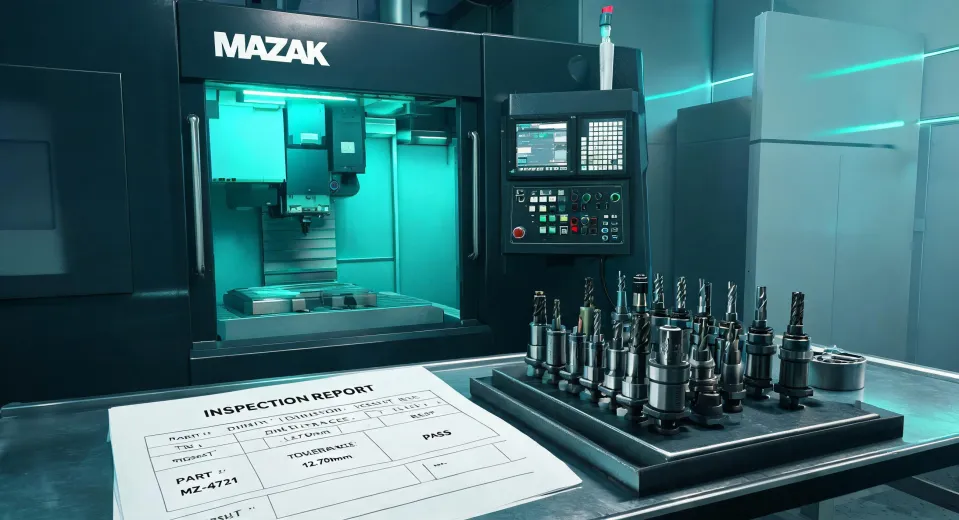
When I first started managing quality compliance for machining shops, I assumed buying used CNC equipment was just gambling with someone else's wear and tear. Three years and about 200 machine inspections later, I've realized that take was, well, incomplete. The truth depends a lot more on what you're actually comparing than whether the machine has a "new" sticker.
So let's compare new vs. used Mazak CNC machines in a way that's useful. Not just specs, but what they mean for your shop floor, your deadlines, and your bottom line.
What We're Comparing
We're comparing a brand-new Mazak machining center (say, a VCN-570 or a 5-axis VARIAXIS from 2024) against a used Mazak lathe or mill from, say, 2015–2020. A lot depends on the specific model and its history, but there are some general patterns worth knowing.
1. Accuracy and Repeatability: The Core of Quality
This is where the gap is most visible. A new Mazak machine leaves the factory with a positioning accuracy guarantee of ±0.0002 inches or better. Used machines? It depends entirely on how it was treated.
A common scenario I've seen: In 2023, we inspected a used Mazak VMC that a vendor claimed was "like new." Our laser calibration showed spindle growth of 0.001 inches after 20 minutes of run time. The ball screws had 0.0005 inches of backlash. Was it still usable for many jobs? Yes. For tight-tolerance aerospace work? Not without significant reconditioning.
My take: A new machine gives you absolute certainty on accuracy specs. A used machine requires a skip inspection and calibration report before you commit. The machine's age matters less than its maintenance log.
2. Technology and Software: The Smart Factory Difference
Mazak's iSmart Factory ecosystem is a big deal now. New machines come with MAZATROL SmoothAi, real-time monitoring, predictive maintenance, and full integration with automation. Used machines from 2017 or earlier? They run older control software. Some can be upgraded, but not all features are retrofittable.
(Note to self: verify retrofit options before promising connectivity to the sales team. I've made that mistake once.)
If you're building an automated production cell or tying into a central data system, a new machine is almost always the smoother path. If you just need a reliable stand-alone machine for a specific job, older tech might be fine.
3. Support, Warranty, and Risk
New Mazak machines come with a full warranty, installation support, training, and a direct line to the factory for service. Used machines—unless you're buying from an authorized Mazak reseller—are "as-is." You're betting on the previous owner's maintenance habits.
Dodged a bullet once: I nearly approved the purchase of a used Mazak lathe that, on closer look, had been rebuilt after a coolant leak damaged the headstock. We walked away. The alternative would have been a $40,000 rebuild within the first year.
Industry standard for used CNC equipment: A thorough inspection includes checking turret alignment, spindle runout (aim for under 0.0005 inches), ball screw backlash, way wear, and coolant system health. Don't skip these.
— Common practice in the used CNC market
When to Choose New
- You need tight tolerances (under ±0.0005 inches) consistently.
- You're building automated cells or a Smart Factory.
- You want full warranty and factory support.
- Your cash flow allows the higher upfront cost.
When Used Makes Sense
- You have a lower budget and can handle some risk and maintenance.
- Your tolerances are standard (within ±0.001 inches).
- You're a job shop with specific short-term needs.
- You can arrange a thorough inspection before purchase.
(Roughly speaking, I'd say about 60% of shops I work with start with used equipment and upgrade to new once they have consistent work.)
Final Thought
This comparison was accurate as of early 2025. The used market fluctuates with general economic cycles, and retrofitting options evolve. Verify current prices and lead times before making your decision. But whether you go new or used, the most important step is always the same: check the machine's real condition, not just its model year.