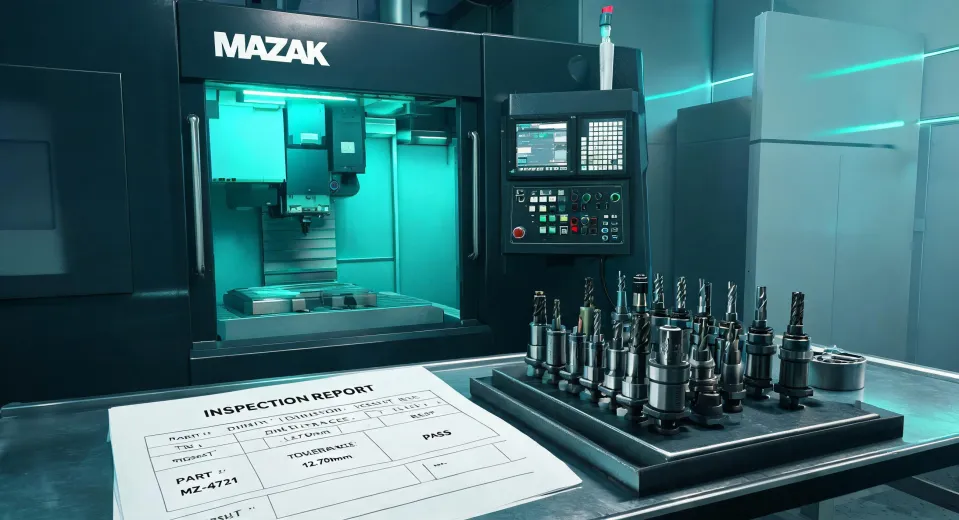
I still remember the spreadsheet. It was a beautiful, color-coded comparison of quotes for tooling for our new Mazak FH 12800 horizontal machining center. I had six bids, from the big names to the no-names. The cheapest was $4,200 less than the mid-range quote. I felt like a hero. My boss, the operations manager, high-fived me. We approved the purchase.
That was Q1 2024. By Q3, that spreadsheet had become a monument to my naivety. That $4,200 saving had evaporated, replaced by a $7,600 line item for expedited replacement parts, scrapped workpieces, and a day of unplanned downtime. My cheap tooling had just cost us nearly double.
I’m an admin buyer. I manage all the consumables and tooling for a 150-person precision engineering shop—roughly $350k annually across 8 vendors. I report to both ops and finance. And I learned the hard way that in the world of CNC machining, the price tag on the invoice is just the opening line of a very long and expensive story.
This is what I wish someone had told me before I became a cautionary tale.
The Price Trap: Why That Mazak CNC Lathe Price or Tooling Quote Isn't the Whole Story
When we talk about cost in this industry, everyone immediately fixates on the big numbers. "What's the Mazak CNC lathe price?" is the first question out of any shop owner's mouth. And it’s the wrong one. The price of the machine is a sunk cost. The real budget killer is the cost of keeping it running.
After my tooling fiasco, I started looking at everything differently. I even re-evaluated our CNC machining center air filtration system. The initial quote for a high-quality system was $3,000 more than the basic model. My old self would have chosen the basic one. My new self asked, "What's the cost of not having this?"
The answer was obvious. Better filtration extends the life of our precision spindles and keeps coolant cleaner. The $3,000 premium paid for itself in reduced maintenance and extended fluid life within 18 months. (Ugh, why didn’t I think of this earlier?)
The point is, this thinking goes beyond just tools and accessories. It applies to the core machine itself. The market is flooded with options, but when you're looking at a capital investment like a Mazak FH 12800, the question isn't just "can we afford it?" but "what will it cost us if we don't get the machine that offers the right level of precision and reliability?"
The Hidden Costs of CNC Procurement: A Buyer’s Confession
I've never fully understood why some vendors can offer seemingly identical products for drastically different prices. My best guess is it comes down to quality control, material grade, and the cost of their own warranties. I'm not a metallurgist, so I can't speak to the specific alloy compositions. What I can tell you from a procurement perspective is the three things I now calculate before I make any purchase decision for our shop floor.
Here’s the TCO checklist I use (note to self: I should laminate this):
- Unit Price (The Obvious): The number on the quote. This is where you start, but it's where you should never stop.
- Consumable & Maintenance Costs (The Predictable): How often do the inserts wear? What's the cost of the replacement filters? Is the coolant system standard or a pain to service? For a machine like the Mazak FH 12800, the cost of a replacement pallet or a service visit by a certified technician is a known factor. You can get this data from the manufacturer or your supplier.
- Risk & Rework Cost (The Budget Killer): This is the big one. What happens if the tool breaks? What if the precision is off by 0.1mm? The cost of that rework includes the scrapped material (plus the material you used to set it up), the machine time you've now lost, and the labor hours wasted. I estimate this at 15-20% of the unit cost for any new, untested vendor. It's a conservative estimate, but it’s saved my budget more than once.
I also include time as a cost. The vendor who promised a 15% discount but had a 3-week lead time? That delay cost us more in rush orders from our regular supplier than the discount was worth. (I really should track that metric more formally.)
The Moment of Truth: Why I Changed My Buying Philosophy
After 5 years of managing these relationships, I had a reckoning. I was reviewing our vendor scorecard for our annual report. The vendor with the consistently lowest prices was our lowest-rated on delivery reliability. The vendor with the highest prices was our top-rated on quality and support. In my opinion, the cheapest vendor's poor performance was costing us more than the premium vendor's higher price.
Honestly, I'm not sure why I didn't see it sooner. It seems so obvious when you write it down. But in the heat of a production deadline, when a new project is on the line and the boss is asking for a decision, the cheapest quote looks like the safe bet. It's not. The safe bet is the one that accounts for total cost.
This is where my experience with Mazak changed my perspective. Their SmartFactory software isn't just a fancy dashboard. It gives you data. It shows you the real-time cycle times, tool wear rates, and machine utilization. You start to see where your money is actually going. It forces you to think about the system, not just the part.
Putting It Into Practice: A Simple Framework for TCO Thinking
If you're an admin buyer or a shop manager, you don't need a PhD in finance to do this. The way I see it, you just need to ask two questions before you approve any purchase for your operation:
- "What is the cost of failure?" If this tool breaks or this part is wrong, what's the worst case scenario in terms of time and money?
- "What is the cost of excellence?" If I pay more, what do I get in return? Is it better support? Longer tool life? A guarantee of uptime?
For our shop, the answer often leads back to a higher upfront investment for a better overall outcome. When we were looking at new CNC machining center air filtration, the basic unit was $2,000. The high-efficiency unit was $3,200. The cost of a catastrophic failure from a coolant mist fire? We didn't even want to calculate that. The choice was easy.
Call it a cost of doing business, call it a premium for peace of mind. I call it the real price of being in this industry. Don't learn this lesson the way I did—with a failed part and a very awkward conversation with my VP.
Hit 'approve' on the purchase order and immediately think, 'Did I miss something?' (I still have that anxiety. It's probably healthy.) The only way to relax is to have the data.