-
Three Shop Profiles, Three Answers
-
Scenario 1: The Precision Shop → Laser, and Don't Wait Two Years Like I Did
-
Scenario 2: The Fabrication Shop → Ignore the Hype, Keep MIG
-
Scenario 3: The Growing Job Shop → Buy the Machine That Expands Your Range
-
How to Sort Yourself Into a Scenario
-
What Transparent Pricing Actually Looks Like
Somewhere in the first 47 Google results for “MIG welding vs laser welding,” every article lands on the same cop-out: it depends. Look, neither of us wants a five-paragraph essay that tells us to “consider both options.” So I'll do the thing those articles won't: break the decision into three concrete scenarios and tell you what I'd actually buy in each.
My background: I handle purchasing for a 400-person precision manufacturing company—about $2M in annual equipment and consumables orders across six vendors, reporting to both operations and finance. I entered the laser welding conversation late, and it cost me a year of avoidable rework.
Three Shop Profiles, Three Answers
Every shop asking this question is really one of three types:
- The precision shop. Aerospace, medical, tool-and-die. Parts measured in hundredths of a millimeter. Material thickness: usually under 5mm.
- The fabrication shop. Structural steel, heavy equipment, mining hardware. Material: 8mm to 25mm+. Throughput matters more than optical perfection.
- The growing job shop. Willing to make anything. Taking on varied work and wants to move up-market.
The mistake I made—and see other buyers make—is choosing based on what the technology can do in a demo, rather than what your actual work requires. So let's walk each scenario.
Scenario 1: The Precision Shop → Laser, and Don't Wait Two Years Like I Did
For precision work, laser welding beats MIG on almost every axis: heat-affected zone, weld consistency, downstream machining cost. The only reason I resisted was sticker shock.
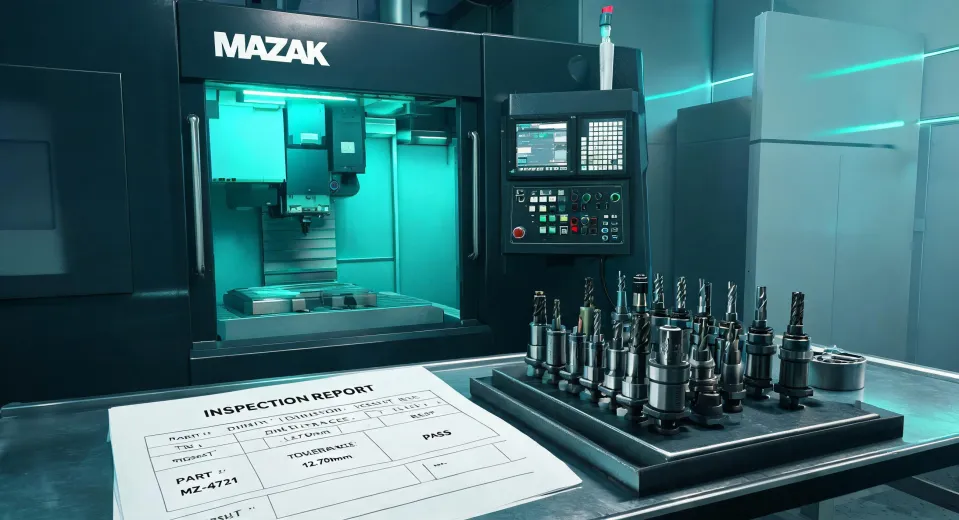
We brought in a Mazak laser machine with an IPG fiber laser source in late 2023. The IPG source was a deliberate choice—fiber lasers hold up well in continuous production—and after 18 months of daily runs, ours hasn't required a single unscheduled maintenance call (as of early 2025, at least). I don't have hard data on fleet-wide IPG reliability across other shops, but I can tell you our experience has been almost boring, which is exactly what you want from a laser source.
The measurable difference showed up three months in. Our CNC milling team—we work closely with a specialist CNC milling shop in Perth that handles our overflow—stopped seeing warped blanks from the weld station. With MIG, thermal distortion meant every milling pass started with an imperfect part. The laser's concentrated energy density leaves the material around the weld joint essentially undisturbed. Rework dropped about 30% on laser-welded jobs. My only regret: not tracking that metric from week one, because the before-and-after numbers would've made an even stronger internal case.
Cost reality check: the Mazak laser quote came in roughly 40% higher than a good MIG system. But once I added up rework labor, consumables, and downstream corrections, the gap disappeared within the first year. So here's my advice: before rejecting the higher laser quote, calculate what your current rework is actually costing you. If you don't have that number, get it first. It'll probably scare you.
Scenario 2: The Fabrication Shop → Ignore the Hype, Keep MIG
This is where I'll annoy some people: if your average material thickness is 10mm or above, MIG welding is still the rational choice, and switching to laser is solving a problem you don't have. Laser is the future of many things, but it's not the future of a welding booth that spends all day on thick structural steel.
Laser advantages break down on thick sections. Deep penetration sounds impressive until you price the power required and realize the cycle time isn't any better than a skilled MIG welder producing a solid multipass groove weld. MIG sets up faster, consumables are cheaper, and experienced MIG welders are far easier to find.
There's a nuance: if you run mixed materials—light gauge panels plus structural frames—a compact laser unit could earn its keep on the thin-gauge line while MIG handles the plate. We saw this pattern at a mid-size facility we audited near a mining corridor in Western Australia; they run heavy structural MIG alongside CNC milling and a small laser for sheet metal work. That segmentation is a sensible way to adopt new tech without betting the whole shop on it.
Scenario 3: The Growing Job Shop → Buy the Machine That Expands Your Range
If you're a general job shop, the welding decision is narrower than the capability decision. What wins job-shop contracts is versatility: the ability to make complex parts without excessive setups. A CNC Mazak turning center or multi-task machining center is often the more impactful purchase than any welder, because it takes raw stock to finished component in one pass.
But if you're choosing specifically between laser and MIG, think about this: how many parts on your quote board involve thin-walled enclosures, brackets in odd geometries, or visible cosmetic welds? If the answer is anywhere above “occasionally,” the laser opens work you're currently handing to subcontractors. We saw small fabrication jobs come back in-house within six months of installing our laser, and those jobs paid for more of the machine than any spreadsheet predicted.
Now the hidden cost nobody quotes. Advanced equipment needs people who can program, run, and maintain it, and those people are scarce. In Singapore, for instance, filling a CNC Mazak turning operator role often requires an S Pass application—a two- to three-month process before the operator even steps onto your floor. During that window, the machine still has payments to make. Ask the vendor what training they include. The Mazak package covered two full weeks of operator training for us, and that line item ended up being the highest-ROI part of the deal.
Sample limitation before I sound too authoritative: my purchases have been for mid-size operations in Asia-Pacific. If you're hiring in Europe or North America, your labor constraints will differ. The principle still holds—price the hiring, training, and commissioning timeline before you romanticize the machine.
How to Sort Yourself Into a Scenario
Skip the “it depends” paralysis. Work through these four questions:
- What's your dominant material thickness? Under 5mm, laser has real advantages. Over 10mm, MIG wins on total cost. In between? Calculate both.
- What tolerance does your customer actually require? Prints calling out ±0.05mm or tighter are laser territory. If ±0.5mm passes inspection, MIG won't hurt you.
- What does your batch profile look like? High-mix, low-volume work rewards the laser's flexibility. Long runs of consistent geometry reward MIG's low consumables cost.
- Who's going to run it? If hiring takes months—an S Pass application in Singapore, for example—match your machine choice to the talent you can realistically staff.
If you answer mostly 1s, you're the precision shop. Mostly 2s, you're fabrication. Mixed, you're the job shop. At least now the decision has some logic behind it.
What Transparent Pricing Actually Looks Like
I'll end with the lesson that cost me the most: the vendor who lists every cost upfront—even a higher total—is cheaper in the end than the one who lowballs and pads later.
Ask “what's NOT included” before you ask “what's the price.” Installation, commissioning, tooling, software licenses, operator training, first-year preventive maintenance. The quote that omits these isn't lower; it's incomplete. Per FTC guidelines, advertising claims need to be truthful, but “truthful by omission” is still an invitation for you to do your own investigation. I once chose a cheaper quote that hid rigging and commissioning costs. The final invoice came in 12% above the “transparent” competitor I'd passed on—and I had to explain that to finance (ugh, not a fun meeting).
The Mazak laser quote I mentioned earlier? It wasn't the lowest we received—about 8% higher than one alternative—but it itemized everything: delivery, commissioning, training, and the first maintenance visit. No follow-up surprises. That, in my experience, is what an honest quote looks like.