-
Scenario 1: One or two prototypes, and the design isn't final
-
Scenario 2: A small run of precision metal parts, and tolerances matter
-
Scenario 3: You're machining in-house and need to standardize the tooling
-
Scenario 4: You need flat sheet components cut to size
-
How to figure out which scenario you're actually in
When I took over purchasing for our operations team in 2020, I assumed sourcing parts was simple: get three quotes, pick the cheapest, move on. Six months and two missed deadlines later, I learned how wrong that was. "Lowest quote" doesn't mean anything when you're comparing a prototyping shop to a production machine shop to a tooling supplier—they solve completely different problems.
What I actually needed wasn't a vendor ranking. It was a way to figure out which kind of solution my internal customer needed before I even picked up the phone.
Here are the four scenarios I sort requests into now. Your situation probably won't fit one perfectly, but most of what crosses my desk—roughly 60 to 80 orders a year across half a dozen vendors—lands somewhere in these buckets.
Scenario 1: One or two prototypes, and the design isn't final
This is the request where an engineer says, "We just need to see if this works." Dimensions aren't locked. The material might change. The last thing you want is to commit to a $3,000 tooling setup on a part that gets redesigned next week.
For this, I look at additive manufacturing first—specifically the PolyJet vs SLS 3D printing decision. I'm not an engineer (and I'll say that openly to every vendor who tries to talk over my head). But I've picked up the practical trade-offs from our design team.
PolyJet gives you smoother surface finishes and can combine rigid and flexible materials in a single part. SLS is generally tougher and better suited for functional stress testing where surface finish isn't the priority. If my engineer needs a part that looks like the final product and holds paint or coating, PolyJet is usually the right call. If they need to bolt it into an assembly and run it, SLS tends to win.
Cost-wise, PolyJet parts generally run higher per part for small runs—partly because support material removal takes labor. SLS gets more economical as part count rises. (This is general guidance; as of early 2025 quote differences between providers are wide enough that you need to actually price it out.)
The mistake I made here: I once routed a "quick prototype" request through a production machine shop that was already in our vendor system. They quoted $2,800 and six weeks. The engineer needed a fit-check model. We could have had it in five days from a 3D printing service for a fraction of that.
Scenario 2: A small run of precision metal parts, and tolerances matter
This is where a CNC turning machining service enters the picture. The part is metal. It needs to hold something on the order of ±0.005 inches or tighter. And the quantity is somewhere between 10 and a few hundred pieces.
Here's the thing about CNC turning quotes: the number you see should be close to the number you pay. If it isn't, something is off.
I had a vendor—won't name them—quote $18 per piece on a 200-piece order. Looked great. Then the invoice arrived with a "programming fee," a "setup fee," a "first-article inspection fee," and something creatively labeled a "shop consumables charge." Effective rate: closer to $27 per piece. That's a 50% gap between what I budgeted for and what finance had to approve.
Now I ask one question before any order: "What's not included in this price?" If they can't answer clearly in an email, I move on.
The FTC's advertising guidance (ftc.gov) is pretty clear that commercial claims need to be truthful and not misleading. A quote that hides half the cost isn't a quote—it's a sales tactic. I'm not saying every vendor with a low quote is hiding something. I'm saying the ones who can't itemize their pricing almost always are.
For recurring precision work, I also ask whether they provide first-article inspection reports. That matters more than most admins realize, because when a customer requests traceability, you're the one who has to produce the paperwork.
Scenario 3: You're machining in-house and need to standardize the tooling
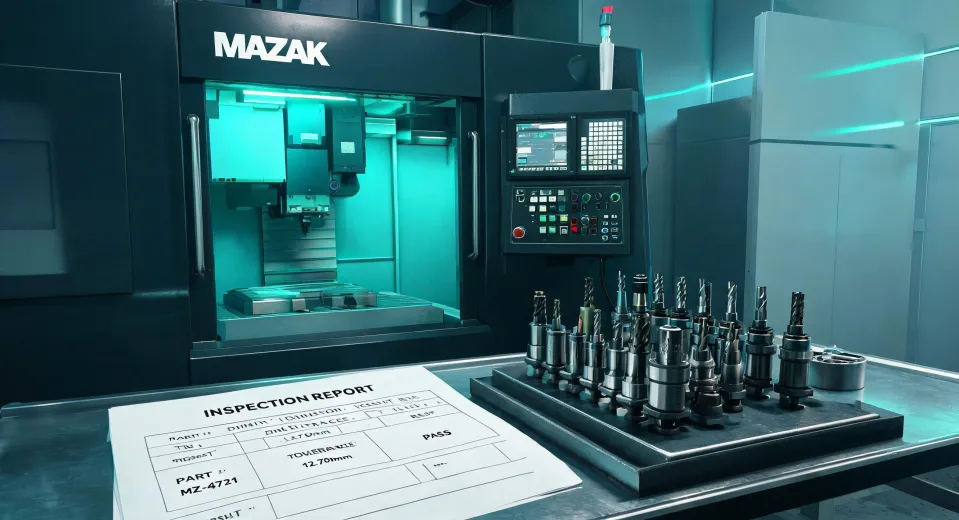
Completely different setup. Here we already have a CNC machine and an operator. What we need is tooling we can count on order after order—without the operator having to guess whether the replacement insert will even fit.
This is where Kennametal turning tools and, honestly, the Kennametal catalog turning system matter more than I expected before I understood our shop floor. When part numbers are standardized across a catalog, my operator doesn't have to eyeball an insert and hope. Same geometry, same grade, same result—and when I reorder from the part number, I get what I ordered. That sounds obvious until you've spent a Tuesday morning returning wrong-grade inserts to a distributor.
I won't pretend to evaluate carbide grades. That's above my pay grade and well above my training. What I can evaluate is whether the tooling arrives on time, whether the packaging prevents damage in transit, and whether the vendor answers a technical question within a business day. Kennametal has made the ordering side less error-prone for us because the catalog keeps the part numbers consistent year over year.
The trade-off is real: premium tooling costs more upfront than the budget alternatives. Whether it pays off depends on your material, your machine, and how tight your tolerances are. If you're cutting aluminum brackets with generous tolerances, budget tooling might be fine. If you're running Inconel on a deadline, the math changes.
Watch for: Anyone claiming "guaranteed higher performance than [brand]" without sharing test data. Per FTC advertising guidelines, performance claims need substantiation—and "guaranteed better" is not substantiation.
Scenario 4: You need flat sheet components cut to size
For flat parts, brackets, and enclosures made from sheet metal, a metro laser cutting service is usually the fastest and most cost-effective path—especially if you're near a major metro area where these shops cluster and freight is short.
What I check: whether they can handle your material thickness without switching to a slower process, whether they'll provide material certs, and whether they'll let you ship in your own sheet stock. That last point matters for cost control if you already have material sitting in inventory.
One practical note that cost me money once: if you're shipping finished sheet parts to a satellite facility or a customer, factor in carrier rates—not just the cut price. USPS First-Class Mail pricing as of January 2025 starts at $0.73 for a 1 oz letter, but actual parts ship Priority Mail or ground freight, and dimensional weight is what gets you. I once picked the "cheaper" laser vendor 600 miles away and the freight ate the entire savings. My finance director was not amused.
How to figure out which scenario you're actually in
Ask three questions, in this order:
- Is the design final? If not, and you need fewer than 10 parts, go to prototyping—additive (PolyJet or SLS, depending on what the part needs to do) or a quick-turn CNC shop that explicitly handles prototypes.
- Do you already have machining capability in-house? If yes, you're buying tooling (Kennametal-style catalog ordering). If no, you're buying a service (CNC turning machining, laser cutting).
- What's the geometry? Rotational parts go to CNC turning. Flat parts go to laser cutting or waterjet. Complex 3D shapes with internal channels might need additive.
Everything I'd read about sourcing said to always get three quotes. My experience with 200+ orders over four years suggests that three poorly targeted quotes are worse than one well-targeted one—they create the illusion of diligence while burning a week of lead time.
If you're still not sure, here's my rule: call the engineer, not the vendor. Five minutes with the person who designed the part will tell you more than three quotes from the wrong category of supplier ever will.
There's no single "best" vendor. There's the right vendor for the scenario you're in. Sorting requests before I call anyone has saved me from some expensive lessons—and the invoices I hand to finance are finally the ones I can predict.