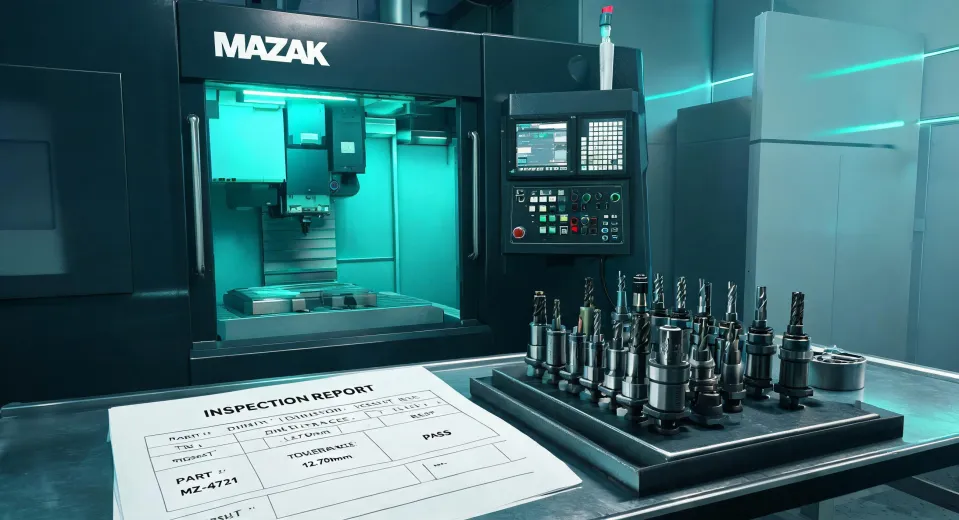
Ask the seller, 'What needs to be fixed?' before you ask the price. That single question could save you 15-20% of the total cost in hidden repairs. I learned that the hard way. I'm a process engineer who's been handling procurement and setup for custom orders for about eight years now. In my first year (2017), I made the classic mistake of buying a used machine based on a YouTube video and a phone call. That was a $3,200 lesson. Now, I maintain our team's pre-purchase checklist, and this is rule number one.
People assume the lowest quote on a used Mazak means they're getting a deal. The reality is that the price tag is rarely the final number. What you don't see is the cost of replacing worn-out linear guides, the price of a new spindle bearing, or the hours of labor to re-level a machine that's been sitting on a factory floor for a decade. I don't have hard data on industry-wide hidden costs, but based on our 7 years of buying and selling, my sense is that buyers typically spend an additional 20-40% of the purchase price within the first year on repairs and tooling.
The Real Cost of a 'Used' Machine
Let's be specific. In September 2022, we bought a used Mazak FH-12800 horizontal machining center. The price was $85,000. A good deal, we thought. The machine looked great in the photos—clean paint, no obvious damage. From the outside, it looked like a reliable workhorse. The reality was different. The linear guides on the X-axis were worn past spec, the Hirth coupling on the tool changer had chip damage, and the coolant system was clogged with a mystery green sludge. The total repair cost? $14,200. Plus, we lost 3 weeks of production while waiting for parts.
This is where the 'transparent pricing' myth in the used machinery market falls apart. The seller who lists all potential issues up front—even if their price looks higher—usually costs less in the end. I've learned to ask 'what's NOT included' before 'what's the price.' The vendor who is upfront about a machine's faults is the one I trust.
The Checklist I Now Use (and You Should Too)
Here's what I do now, every single time. It's not perfect—I wish I had tracked our inspection pass/fail rate more carefully—but it's saved us from at least a few disasters.
- Spindle Runout: Run a dial indicator on the taper and the face. Spec is usually within 0.0002 inches. If it's over 0.0005, budget for a spindle rebuild ($3,000-$8,000).
- Linear Guide Preload: Feel for play in the axes. On a Mazak QT-200 lathe (a popular one, we've bought three), loose guides are common after 8,000+ hours.
- Tool Changer Timing: Listen for hesitation or grinding. A damaged cam follower on a FH-12800 (like the one we bought) means a 2-day repair and a $600 part.
- Coolant System: Pull the tank cover. Check for sludge, tramp oil, and pump health. Replacing a pump and cleaning a tank runs $1,200—no, $1,400, I'm mixing it up with the other project where we had to replace the tank entirely.
I once ordered a used Mazak CNC lathe (a QT-200) with a supposed 'minor' issue with the tailstock. Checked it myself, approved it, processed the PO. We caught the error when the machine arrived and the tailstock was seized solid. $4,500 wasted on a rebuild plus a 1-week delay. Lesson learned: always get a video of the specific issue running, or don't buy.
What About a New or Used High Precision Vertical Machining Center?
The same principles apply to a high precision vertical machining center (VMC). A used Mazak VMC like the VCN-430A is a solid machine, but the spindle taper needs inspection. People assume a high-precision machine stays high-precision forever. Actually, thermal growth over time, plus crashes, can knock a spindle out by 0.001 inches. A remanufactured spindle with a new bearing set is not cheap—usually $4,000-$7,000, depending on the model.
For a 40W laser cutter for metal (though Mazak's lasers are typically much higher power), the hidden costs are similar. A worn lens, a misaligned beam path, or a failing chiller can add 15-30% to the purchase price. In 2025, we quoted out a used laser from a different brand and learned that the 'minor' gas leak they mentioned was actually a resonator issue. That $8,000 quote turned into a $22,000 repair. We walked away.
OK, But What If You're Looking at a Mazak FH-12800 Specifically?
The FH-12800 is a beast. A horizontal machining center that size is usually bought for big aerospace or mold work. The biggest hidden costs here aren't the spindle—they're the pallet system and the way covers. A damaged pallet clamp can cost $2,500 to fix. Way covers that are torn will let chips in, and that will kill your guides in months. The assumption is that big, expensive machines are built tough. The reality is they're built for maintenance, and if the previous owner skipped it, you're paying.
In Q1 2024, I created our pre-check list specifically for horizontals. We've caught 5 potential issues using it in the past 18 months, totaling maybe $18,000 in avoided repairs. It's not perfect, but it works.
The Fine Print: When This Advice Falls Short
This 'buyer awareness' approach works best for buyers who can handle minor repairs themselves or have a relationship with a good service tech. If you're a shop that needs a machine to run 24/7 from day one, a used purchase is probably not for you. The risk of downtime is real.
Also, this mostly applies to machines from the 2000-2020 era. A newer machine (2021+) under warranty is a different story. For a brand-new Mazak, you should trust the dealer's inspection. For a used one, trust your own eyes and the checklist.
Finally, this isn't about attacking used dealers. Some are excellent and honest. But I've learned that the machine that looks 'bargain priced' on paper often costs more in the end. The one where the seller is upfront about every scratch, every worn belt, and every tool holder missing a screw? That's the one I buy.
I don't have hard data on how many buyers get burned. But anecdotally, I'd say 6 out of 10 used machine purchases I've seen over the past 8 years ended up costing 20% more than the buyer initially budgeted. If I had tracked it more carefully, maybe I'd have a better number. What I can say is that if I had started using this checklist when I started, I would have saved roughly $20,000—maybe more. A 2018 mistake (thinking a light crash was cosmetic) cost me $2,200 in a new turret indexing motor. That one hurt.